


Without interagency and intergovernmental cooperation under NEPA, environmental outcomes will suffer.
The National Environmental Policy Act (NEPA), enacted in 1970, requires that federal agencies disclose the environmental impacts of major federal actions prior to committing resources or granting project approvals. While the law has historically been immune to political shifts, NEPA has seen more changes in the past year than perhaps at any other point in its five-decade history. These recent changes—driven by a trend away from agency deference and an increase in regulatory rollbacks—have unsettled the interagency and intergovernmental regulatory structure that, despite its limitations, played a vital role in making NEPA’s implementation more effective.
Although NEPA’s text does not grant rulemaking authority, courts have long deferred to the Council on Environmental Quality (CEQ) for establishing the NEPA implementation rules for agencies. CEQ, in turn, established uniform baseline rules to implement the environmental review process, allowing agencies some discretion to tailor procedures based on their statutory mandates. Congress has occasionally buttressed CEQ’s implicit rulemaking authorities. In 2023, Congress passed the Fiscal Responsibility Act, which included a section called the Builder Act. The Builder Act codified the responsibilities of lead and cooperating agencies, encouraged the use of a single review document for multi-agency reviews, and allowed state, local, and tribal governments to request cooperating agency status. By reducing variation in how agencies implemented NEPA, this structure provided stakeholders with a more stable regulatory environment that facilitated long-term planning.
The long-standing deference to CEQ, however, has come under increased scrutiny. Last November, in Marin Audubon Society v. Federal Aviation Administration, the U.S. Court of Appeals for the D.C. Circuit ruled that CEQ’s regulations were beyond the scope of its legal authority. Shortly thereafter, the U.S. District Court for the District of North Dakota issued a nationwide injunction blocking the Biden Administration’s rule implementing “Phase 2” of its NEPA revisions in Iowa v. CEQ, noting that “CEQ had no authority to issue a binding rule” because it “inappropriately relies on executive orders and not direction from Congress.”
These cases come on top of a February interim final rule from CEQ rescinding the previous NEPA implementation rules. CEQ’s subsequent memo provided agencies with some directives for issuing new NEPA regulations. It did not, however, provide guidance on early engagement across agencies and governments or the integration of statutes, both of which were overlooked in the Builder Act.
The elimination of major aspects of CEQ’s uniform framework drew immediate concerns from industry and environmental stakeholders for its effects on regulatory uncertainty, including the efficacy of intergovernmental cooperation.
The cooperative framework is particularly salient in NEPA’s environmental impact statement process. Environmental impact statements are documents that agencies are required to prepare when a proposed action has a significant impact on the environment. These documents identify potential environmental effects of the proposed action and evaluate alternatives based on agency expertise and public input. Under the rescinded rules, federal agencies were required to engage in “interagency cooperation before the environmental impact statement is prepared, rather than submission of adversary comments on a completed document” and to eliminate “duplication with state and local procedures, by providing for joint preparation” of environmental statements. These requirements enabled reviews to encompass requirements across jurisdictions and statutory obligations, ensuring the “hard look” requirement was fulfilled. The hard look requirement mandates that agencies take a “hard look” at environmental impacts, rather than achieve a specific substantive outcome.
Without this mandate, agencies are free to conduct reviews based on their missions, scientific assumptions, and scoping procedures. In this legal environment, a project might meet the requirements of one statute under a specific set of conditions yet fail to satisfy another statute under an entirely different and potentially conflicting set of conditions. This issue would typically be resolved by requiring early coordination among agencies. However, without CEQ’s mandate to do so, this system could fall apart if cooperation requires that one agency accept legal risk for another agency’s decisions or compromise its own statutory obligations under pressure from stakeholders with conflicting priorities.
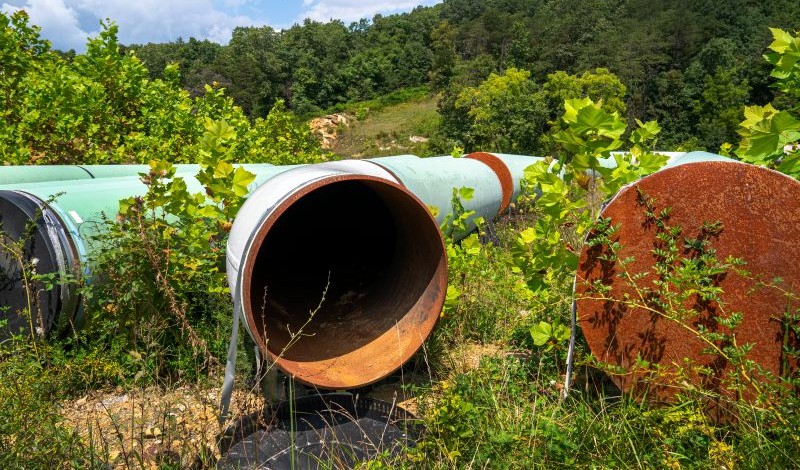
Inadequate cooperation nearly led to the cancellation of the Mountain Valley Pipeline in West Virginia. he U.S. Court of Appeals for the Fourth Circuit ruled that the United States Forest Service (USFS) failed to comply with NEPA when it adopted the environmental impact statement of the Federal Energy Regulatory Commission for the Pipeline project. The court found that this decision was made in the name of expediting the project timeline, a consideration unrelated to NEPA’s requirements and thus violated the Administrative Procedure Act. The USFS was subsequently forced to conduct an additional assessment to address the stream impacts of the project. The process only concluded when Senator Joe Manchin (D-W. Va.) secured another provision in the Fiscal Responsibility Act to expedite the Mountain Valley Pipeline. This case underscores that in an adversarial legal environment, risk-tolerant stakeholders may not take adequate steps to prevent litigation. If they end up facing the courts, NEPA litigation lasts a median duration of 23 months.
Efficiency gains are not the sole outcome of interagency and intergovernmental collaboration. Each agency operates under its own information constraints. Researchers from the USFS found that interagency and intergovernmental collaboration tends to lead to “broader and more thorough understanding of the issues at hand, enhanced learning, a wider array of potential alternatives to consider, and more sound resource management decisions.” Information constraints are being partially alleviated through additional technical expertise and context-specific knowledge. A recent study conducted by Tyler Scott at the University of California, Davis found that collaborative teams, such as those described by the USFS, lead to improved environmental outcomes for infrastructure projects, with the greatest benefits realized by the most well-coordinated teams.
Importantly, the UC Davis study conducted by Scott shows that interagency coordination, even under procedural laws such as NEPA, may influence substantive environmental outcomes. As an example, the Bureau of Prisons, which only engages in informal collaboration during the latter stages of reviews, sought to construct a $444 million federal facility in Letcher County, Kentucky. A comment on the draft environmental impact statement highlighted that the review failed to sufficiently consider the effects of the construction on water quality—typically addressed by the U.S. Army Corps of Engineers—and mining activity—typically addressed by the Office of Surface Mining Reclamation and Enforcement. When the review was released, the omitted impacts became grounds for litigants to attempt to block the project. Ultimately, the Bureau of Prisons rescinded its decision “based on new information which may be relevant to the environmental analysis.”
Although both the Bureau of Prisons project and Mountain Valley Pipeline were reviewed under CEQ’s NEPA rules, the failure to effectively coordinate only highlights the need for strengthening intergovernmental and interagency coordination, not eliminating a workable—albeit imperfect—system. Since CEQ’s implementation rules were rescinded, agencies have been slowly releasing draft frameworks of their new NEPA rules. These frameworks have lacked mention of interagency or intergovernmental cooperation, indicating a regression that threatens efficiency and environmental gains.
