


Reclite SA’s Managing Director, Steffen Schröder
The reality is that recycling efforts are still subject to market conditions. It does not matter how innovative or environmentally positive a recycling effort is if there is no market for it. South Africa’s recycling sector needs to look at itself realistically to achieve its goals.
“South Africa has a waste problem, and if we just replicate what is being done without considering the data to inform decisions, we won’t make any headway,” says Reclite SA‘s Managing Director, Steffen Schröder.
He goes on to say, “The problem starts with how we conceptualise waste. If you look at waste as just waste, you will miss the fact that it is a product itself. Instead of mining waste for one specific resource, a comprehensive approach will alter the way you see it. For example, the push to retrieve metals from batteries leaves out the other components that could also generate value.” Schröder calls this perspective shift, waste-to-product, underlining that waste is a resource if treated as one.
Batteries
Recovering metals from lithium batteries only works with certain batteries, and Schröder explains that in the South African market, the majority of the batteries are lithium iron phosphate batteries, which do not contain the valuable metals that make this waste stream positive.
He says, “These batteries do not have the required materials to turn a profit, and lithium alone is not enough for a positive waste stream. Old school thinking then says, ‘this isn’t viable’ but if you look at the whole battery as a product and not waste, there are many recoverable items.”
Even the way batteries are processed does not reflect the circularity promised by recycling.
“A lot of companies will use a pyro-metallurgical process to recover materials. This is just a fancy way of saying they burn the battery, which not only has a large carbon footprint, but it also destroys most of the battery to recover very little. We are not after just one fraction of the battery, so we use a hydro-metallurgical process to recover the entire battery.”
This recovers graphite, which has an active market and is available in all batteries, not just some. By looking at what the battery is made of, and not mining the usual high-value materials, Reclite SA can process and sell graphite steadily.
Renewables
The renewable market in South Africa is poised to grow. The domestic solar market is estimated to grow by 34% between 2023 and 2028, and as more solar panels are used, more will have to be discarded.
“Renewables have their maximum impact if they are managed correctly. It does not help that solar is a clean energy resource if the panels are not disposed of and processed correctly,” adds Schröder.


While glass can be recycled, the real value of solar panels lies in the silicon layer, the layer that actually produces energy. By extracting the silicon, there is a chance for true circularity; one panel of silicon can be used to produce another.
Schröder says, “There is also potential in recycling the composite materials that are found in wind turbines. The true test for potential lies in understanding waste as a product and using proper market research to see where the potential can go.”
Understanding the market
Schröder explains that testing management solutions usually follows:
- A pilot test: This tests the technical solution or innovation for accuracy and results. “If you produce a solution, you test it here. See if it works,” says Schröder.
- Artisanal stage: If the pilot test proves positive, the solution can be used in small batches, which will result in more efficient processes and put the technical solution into practice.
- Industrial: If the artisanal stage yields positive results and the solution is economically viable, then there is space to scale up the process and have it used at a larger scale.
South Africa has no shortage of technical solutions and innovation, but to avoid wasted capital and projects ending, Schröder says, “The trick is to do your research. Technical solutions are great, and artisanal use of these solutions is also great, but only a few can really be scaled up for widespread use. You must understand what the market wants and your supply before scaling up. In some cases, artisanal solutions are fine as they are, and scaling them would result in financial losses, so it would be better to keep the process small. If you understand what you have, then you know its place.”
Waste management is very much an ecosystem; there is space for artisanal and industrial processes, and a mix of the two is necessary to tackle South Africa’s waste problem. Schröder calls this ‘an economic approach to production where waste is seen as the primary resource.’
A long-term approach to sustainability
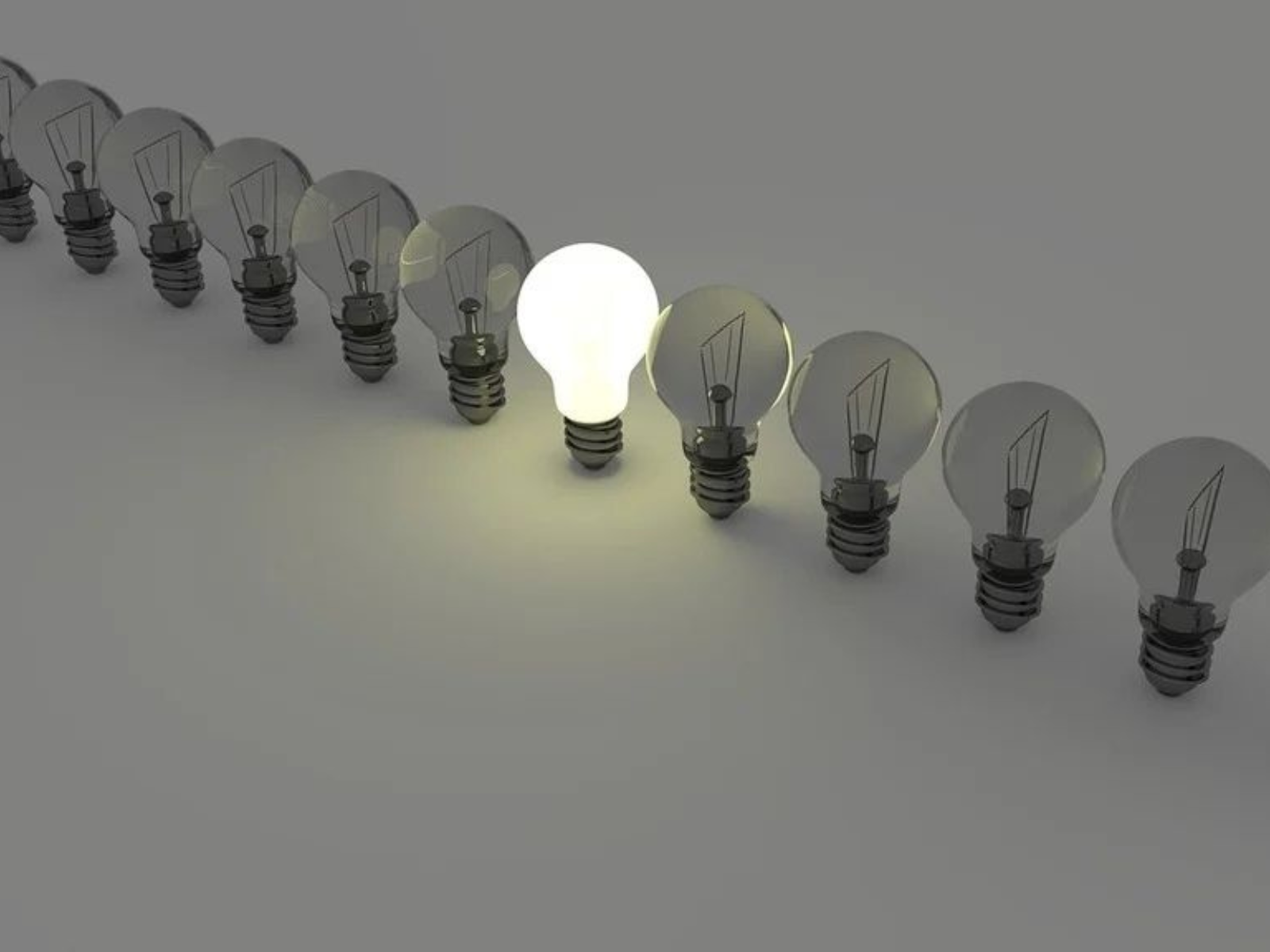
Florescent lightbulbs might not return on rare earth metals but thanks to market research Reclite SA were able to find a new market for them
Sustainability is not a short-term goal, and therefore, sustainable solutions should work towards long-term goals.
“As an example, fluorescent bulbs contain rare earth metals, and everyone is crazy about recovering these metals. Reclite SA conducted a pilot test and expanded to the artisanal stage, and then we left it there. Now there is a solution, and there is a market, but the machine you would need to process these rare earth metals at an economically viable rate costs millions, and the disposal process for the acids required is also costly. And now for the biggest problem, there is a ban on this kind of fluorescent lighting. So, the market has an extremely limited supply, and it cannot grow,” says Schröder. Technical solutions are subject to regulation and the market, and in this case, it made the recovery of rare earth metals non-viable.
Reclite SA saw this trend and instead found a new way to valorise the waste and sell it on the local market. This did not require capital and is a sustainable approach to recycling this product. “We identified. “Using the same supply but focusing on a totally product, in this case material for blasting, and surface finishings, we were able to commercialise a neglected waste stream.”
Schröder concludes, “By understanding the market as a key part of long-term sustainability, technical solutions become real solutions.”
